Your Cart is Empty


The best type of hanger depends on three things: weight, fabric, and cut. Heavy items need stability and wide shoulder support, delicate fabrics need a gentle surface, skirts and trousers need clips or a bar so they hang straight. If you use a system of a few suitable hanger types, clothes will stay in shape longer, slip off less often, and your wardrobe will look tidier.
Many people only consider aesthetics or price when buying hangers. In practice, a quick check is worthwhile:
First, the width. The hanger should reach the shoulder seam, but not extend significantly beyond it. Hangers that are too narrow create pressure points, while hangers that are too wide pull sleeves unnaturally outwards.
Second, the support surface. The heavier the garment, the more important a stable, wide support is. This way, the hanger supports the shape instead of distorting it.
Third, the surface. Delicate fabrics benefit from smooth, clean surfaces without edges. Slippery materials need more grip, otherwise the item will quickly end up crooked in the wardrobe.
Fourth, the hanger shape. Collars and shoulder lines are not the same for every garment. A shirt needs a different shape than a knitted sweater.


For shirts and blouses, a classic shirt hanger with a clear shoulder line is suitable. Pay attention to the correct width so that the shoulder area lies flat. Notches are practical for tops or blouses with straps to prevent them from slipping off the sides.
Blazers and jackets benefit from shaped hangers with stronger shoulder support. This keeps the silhouette stable and prevents the garment from hanging on a narrow edge. For suits, combination hangers are useful, as they allow the jacket to hang nicely and the trousers to lie neatly over the bar.
Heavy outerwear requires maximum stability. Here, wooden hangers are often a good choice because they are strong and offer a wide support surface. Similarly, sturdy metal hangers can work if they are designed for heavy loads. It is important that the shoulder shape is not too narrow. Otherwise, pressure marks will form and the shoulder area will lose its shape.
Knits are elastic and react quickly to incorrect support. For sweaters, round, gentle supports are better than narrow edges. For very heavy knits, storing them flat is often the best solution, as their own weight can otherwise stretch them out over time. If you do hang them, pay particular attention to the appropriate width and a surface that does not stress the fabric at specific points.
Dresses are versatile. Light dresses work well on universal hangers; heavier dresses benefit from shaped hangers to ensure the shoulder area sits neatly. Strappy dresses hang more securely with notches.
Skirts hang best on skirt hangers with clips. Make sure the clips are gentle to avoid leaving marks. For delicate fabrics, it's worth monitoring the clip strength.
For trousers, there are two common variants. Trouser hangers with a bar are well-suited if you want to hang trousers over and avoid creases. Clamp hangers are ideal if the trousers need to hang perfectly straight, for example, suit trousers or uniform trousers. Which variant is better depends on the fabric and whether you want to avoid a visible crease.
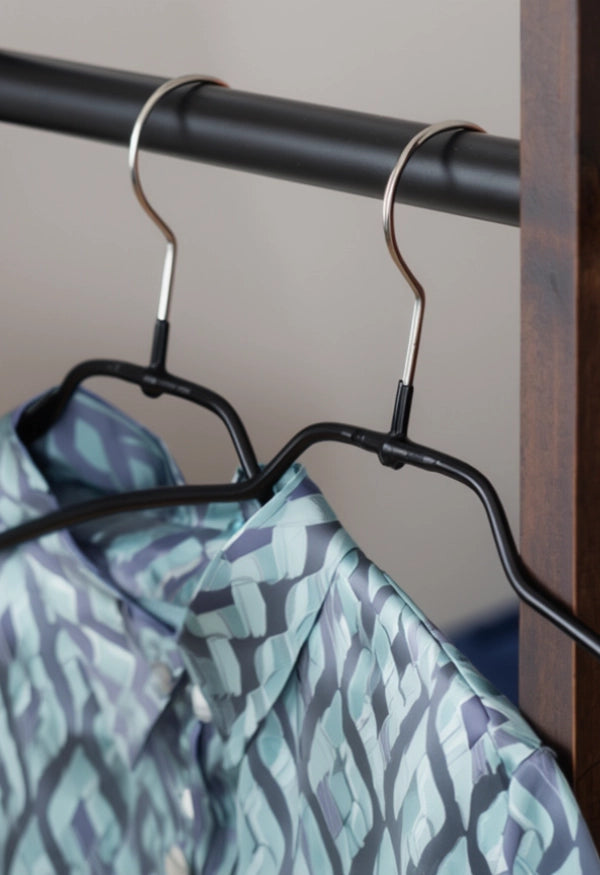
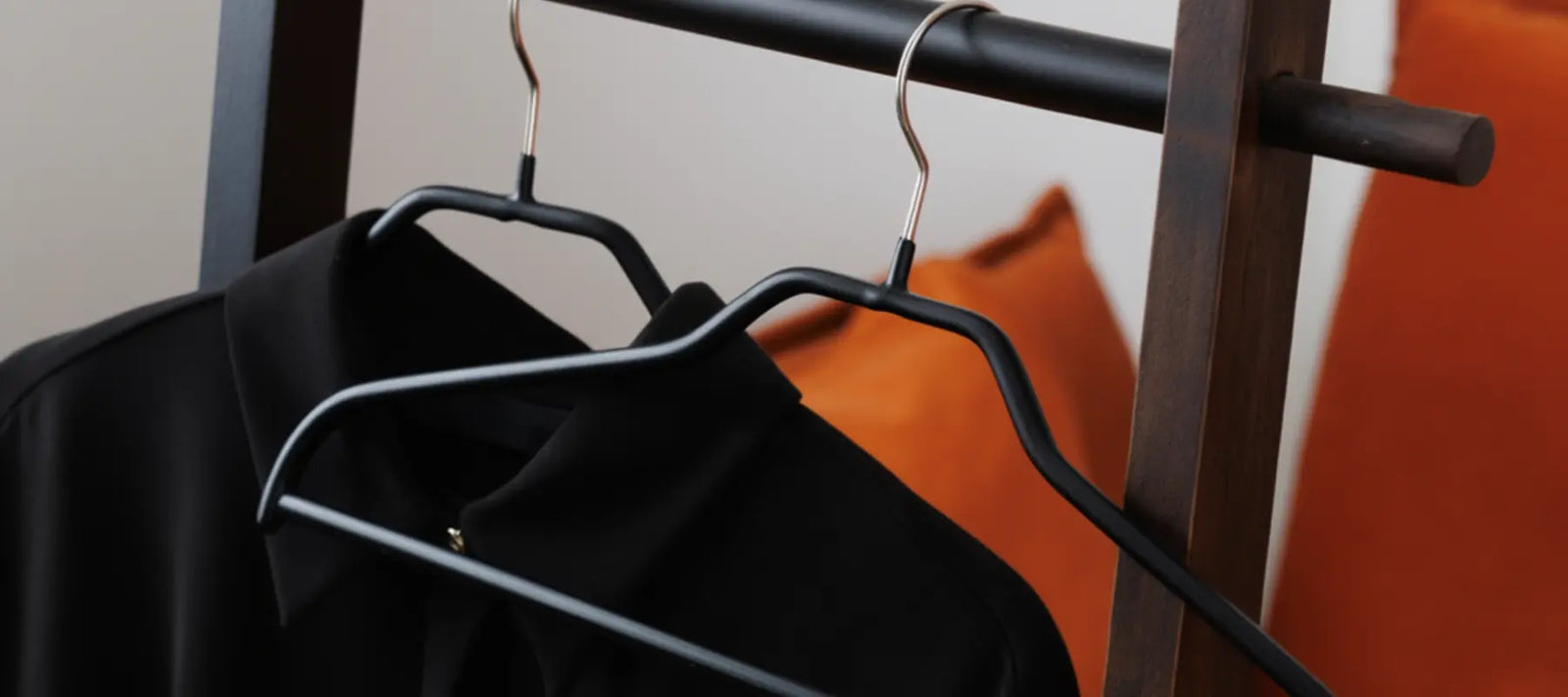
Wooden hangers are stable and have a high-quality look. They are well-suited for heavy items and a natural home style. Metal hangers are slim and space-saving. They are ideal if you want to build a uniform system with many items, whether in a dressing room or on a simple clothes rail. Sustainable hangers are particularly useful when material choice and durability go hand in hand. In practice, the service life is often the most important factor. A hanger that lasts for many years saves budget, clothing, and resources.
As a rule of thumb, the hanger should end at the shoulder seam. If the hanger is significantly shorter, pressure points may occur. If it is significantly longer, sleeve marks often appear.
Important factors are the correct width and a sufficiently wide, gentle shoulder rest. Very narrow hangers more often create bumps, especially in knits and soft-draping fabrics.
Hanging over the bar is straightforward and works well for many fabrics. Clipping is ideal if the trousers need to hang perfectly straight, for example, for suit trousers or uniforms.
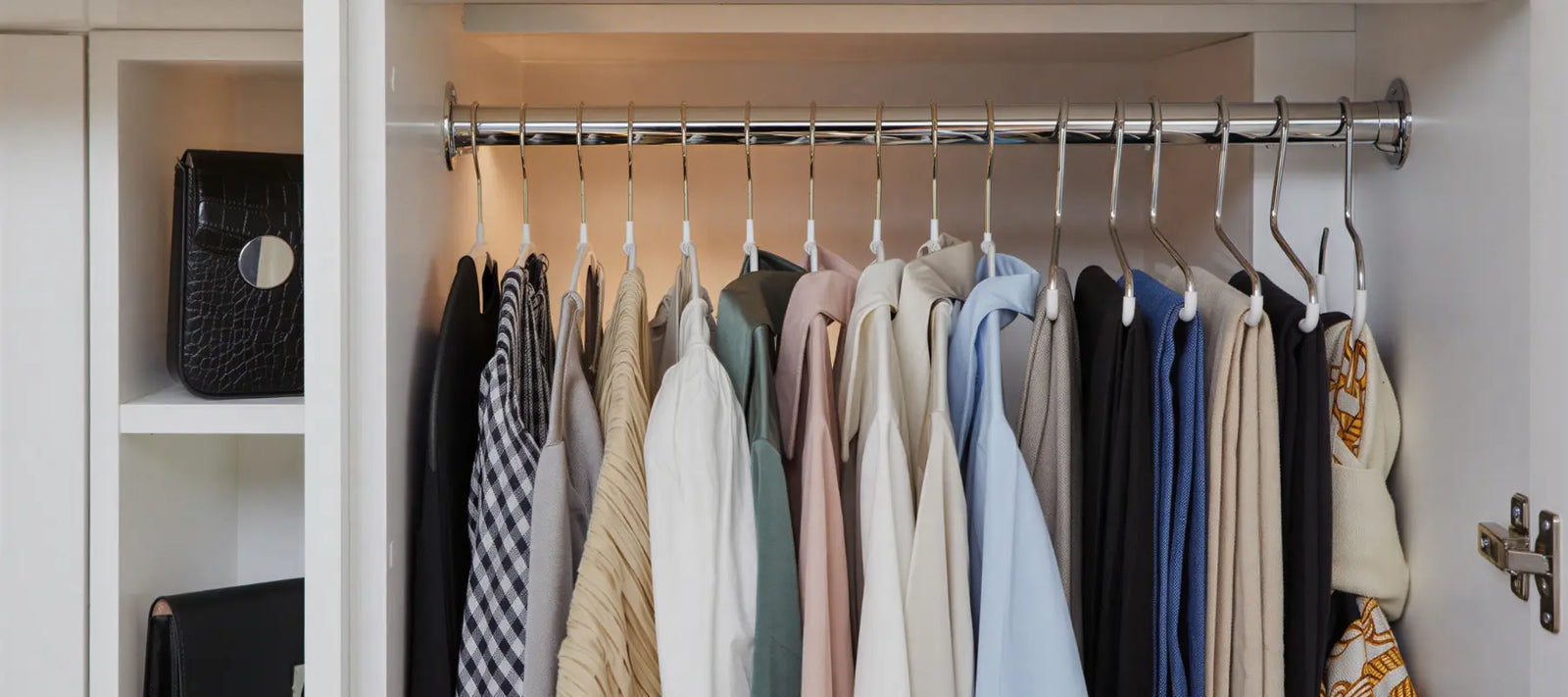
Usually, three to five types are sufficient, for example, shirt hangers, shaped hangers for blazers and coats, skirt hangers with clips, and a trouser hanger. It's important that the few types truly suit your most common garments.


Ultimately, it's not about owning as many types of hangers as possible, but about owning the right ones. If the width, shape, and surface match your garments, your wardrobe will stay in shape longer, slip off less often, and look tidier in the closet. A consistent system also saves time because each item immediately has its place, and you don't constantly have to re-hang or re-sort. Anyone who establishes this logic properly will reduce replacement purchases and create an order that works permanently.